

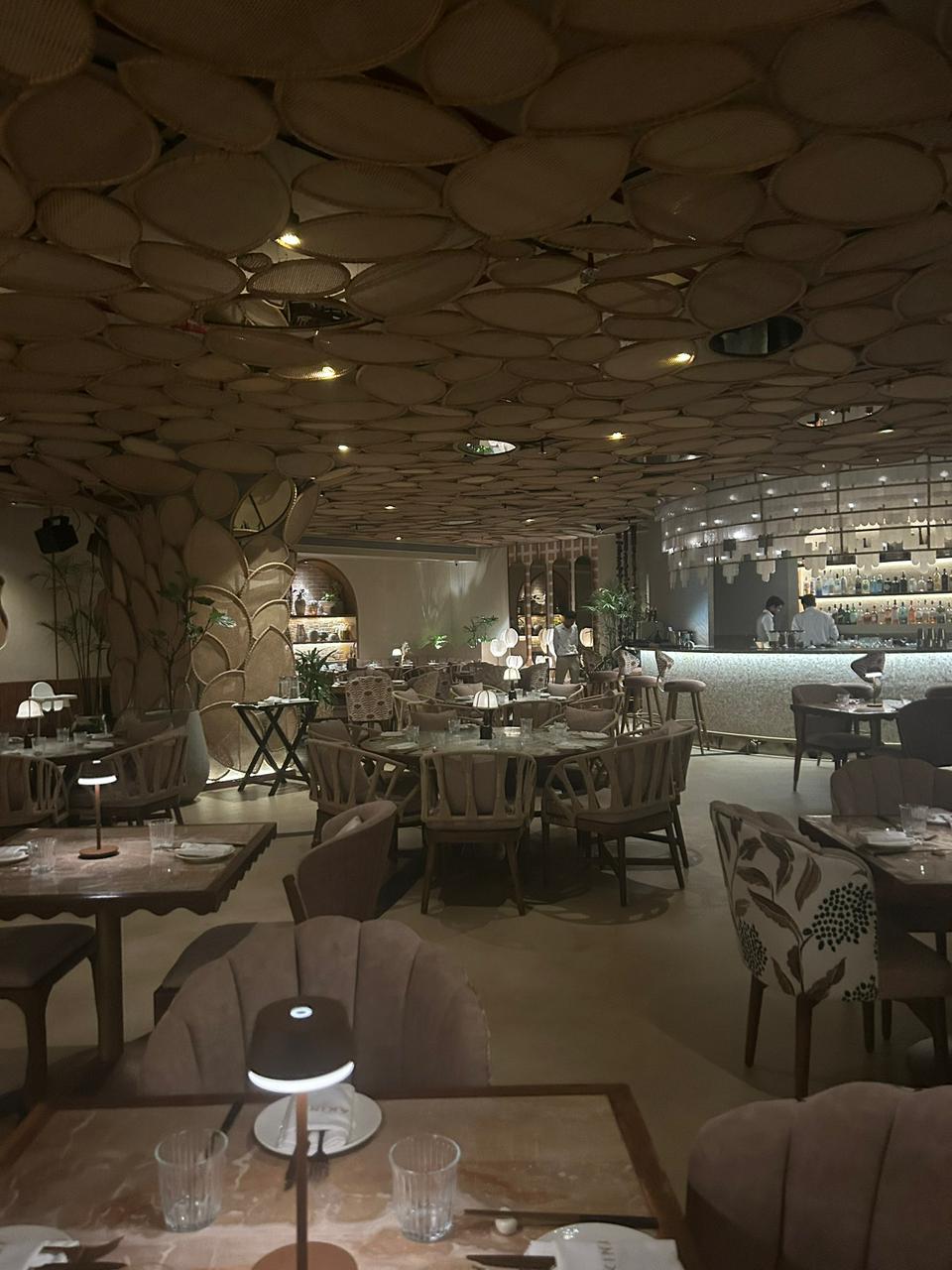
Born as a modern Asian dining destination rooted in Japanese sensibilities, Akina’s journey in Mumbai has been one of evolution rather than reinvention. With her new Worli chapter, Akina sheds excess and steps into a more food-forward, refined avatar, where technique, flavour, and narrative take centre stage. This new chapter feels calmer, more confident, and deeply intentional—less about spectacle, more about substance.
Helmed by Aksha Kamboj, Executive Chairperson of Aspect Global Ventures, and Hitesh Keswani, Managing Director of Aspect Hospitality, Akina reflects a clear vision: honour tradition while embracing progression. The idea of Akina as a woman—rooted in Japanese heritage yet shaped by global travels—comes through effortlessly, not just in concept, but in execution. The hospitality feels warm, personal, and unforced, a sentiment echoed by the team on the floor and in the kitchen.
Designed by Istaka under architect Mehak Kapoor, the interiors are understated yet deeply narrative-driven. From the rattan-patched ceiling that reads like a map of Akina’s travels, to the organic, flowing floors that mimic rivers and journeys, the space invites you to linger. Soft greys, sand tones, ash woods, and subtle pops of colour strike a balance between Japanese minimalism and global warmth. The glowing mother-of-pearl bar at the centre anchors the room beautifully, while gentle lighting and clever zoning create semi-private pockets perfect for long conversations and unhurried meals.
The menu, curated under the guidance of Brand Chef Ganesh Pandit, Head Chef Tenzing Sherpa, and Creative Culinary Head Chef Ashwin Singh, is where Akina truly comes into her own. Modern Asian flavours are viewed through an Indian lens, resulting in dishes that feel both intelligent and emotionally familiar.
The Akina Edit, by Chef Ashwin Singh
From truffle-infused Negronis to yuzu-laced pani puri, Chef Ashwin Singh’s Akina Edit feels like a conversation—bold yet comforting, playful yet deeply rooted. This is modern Asian food that doesn’t shout for attention; it draws you in with nuance, texture, and memory. Every bite and sip carries a sense of theatre, but one that’s intimate rather than performative.
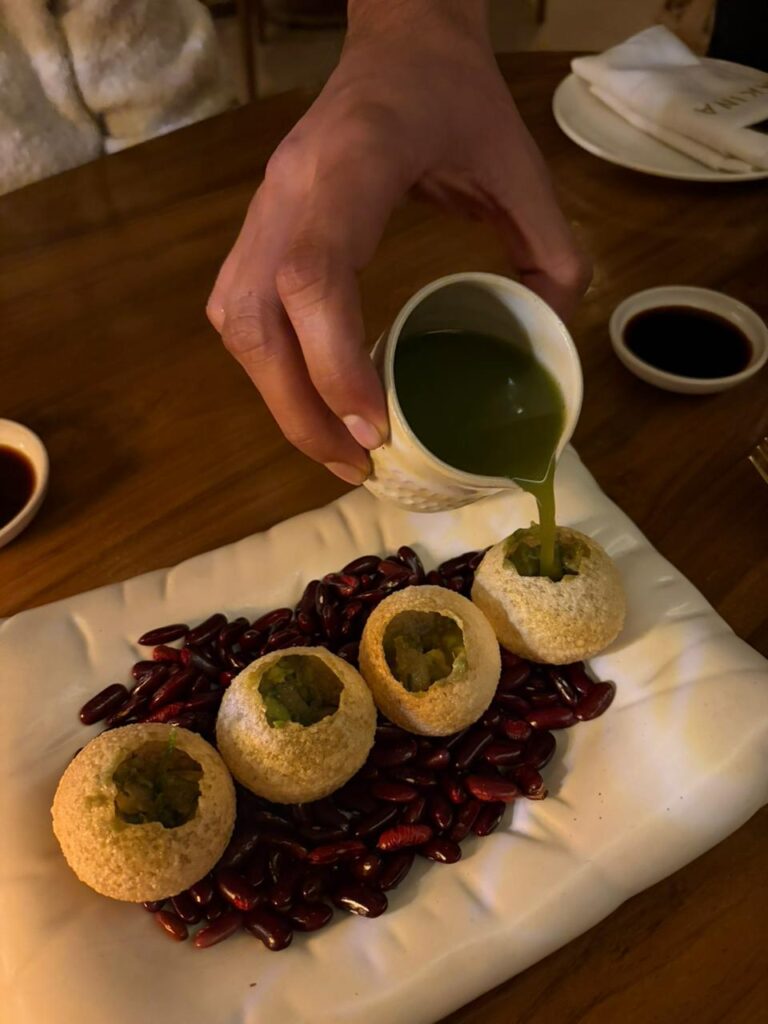
Ashwin insists I begin with the Yuzu Gazpacho Pani Puri, and rightly so. His apni pani puri arrives with an avocado and water chestnut stuffing, lifted gently by kaffir lime. The pani—a raw mango, mint, and yuzu pour—is tangy, refreshing, and clean, with the kaffir lime leading the palate without overpowering it. It’s familiar yet surprising, nostalgic yet global, and instantly sets the tone for what’s to follow.
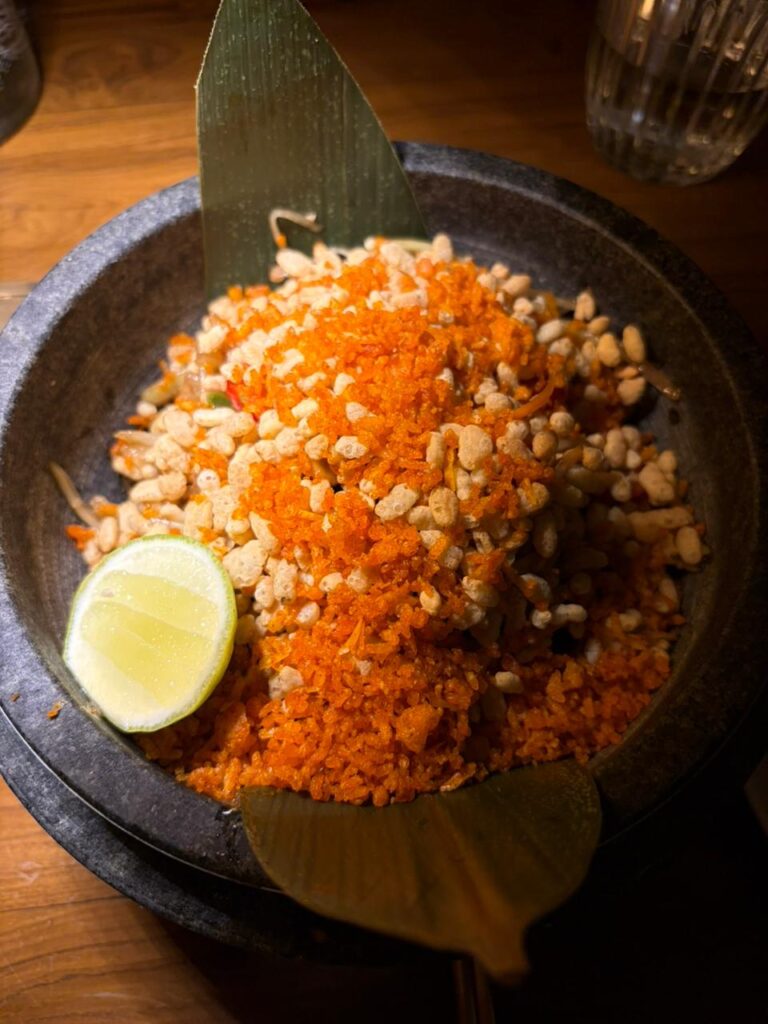
For vegetarians, the Som Tam Bhel is a standout from the Edits. Prepared tableside, it brings together the soul of Kolkata’s jhalmuri and the punch of Thai som tam. Fried puffed rice delivers the crunch, while carrots, raw mango, cherry tomatoes, tamarind, and som tam dressing come together in a vibrant, textural mix. Watching it come together is part of the pleasure; eating it is even better.
The Burnt Avocado & Tender Coconut Ceviche leans into restraint. Creamy avocado meets soft pieces of tender coconut, brightened with passion fruit and coconut milk. The dish is subtle, almost meditative, with black sesame providing just enough crunch to break the softness. It’s elegant, light, and thoughtfully composed.
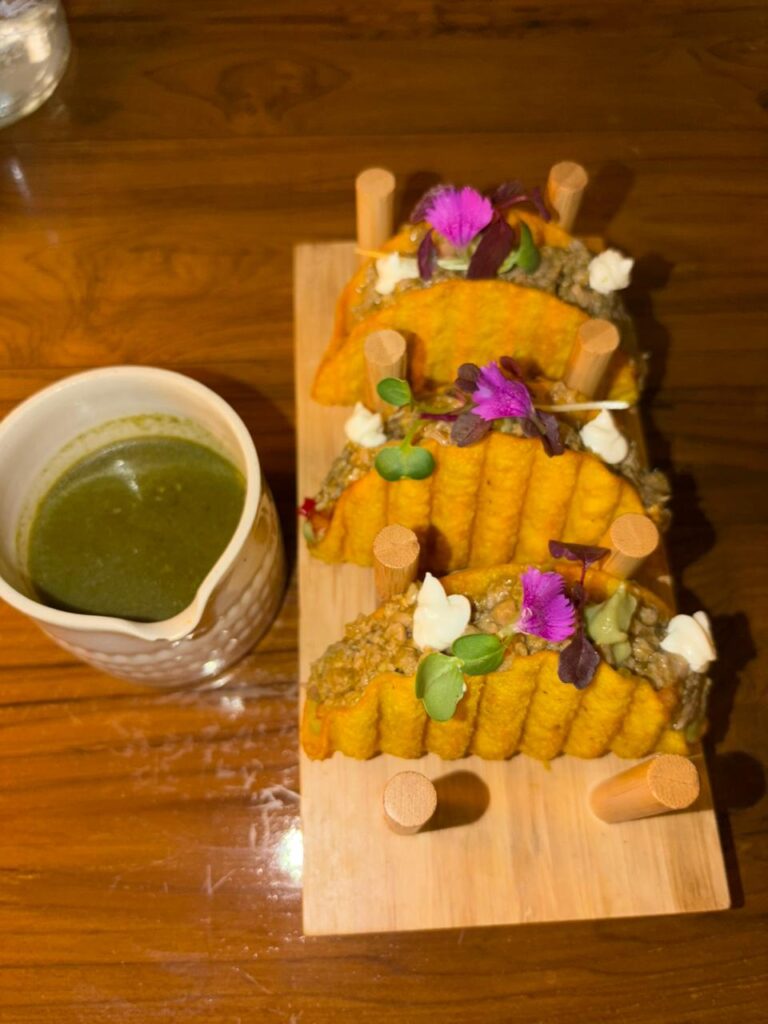
A clever reinvention follows with the Lamb Birria Taco, where a wonton sheet replaces the traditional shell. The slow-roasted lamb mince is rich yet balanced, glazed with gongura pickle and finished with coriander, kaffir lime, and a yuzu dip. The first hit is unmistakably gongura—sharp and nostalgic—followed by chilli warmth and citrusy lift. It’s playful, bold, and unmistakably designed for the Indian palate.
For mains, the Assamese Black Curry Udon is an inspired choice. I opted for the vegetarian version, though prawns come highly recommended. Fresh udon noodles are coated in a deeply comforting black sesame and coconut milk sauce, balanced with a dash of soy and finished with bamboo shoots and vegetables. Inspired by Assamese and Khasi flavours, the dish feels soulful, warming, and quietly luxurious. Vegetable-forward dishes are thoughtful and confident, never feeling secondary. The asparagus preparation is clean and well-balanced, while the Lamb Rendang with Roti Canai delivers depth of flavour, though the lamb could benefit from greater tenderness.
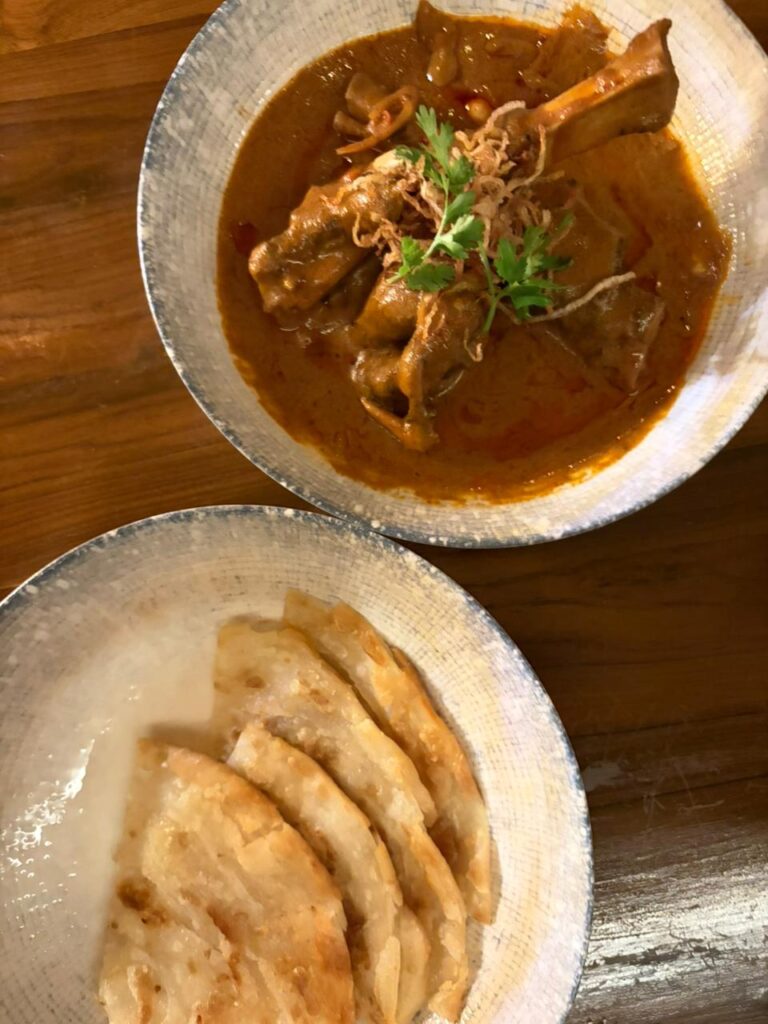
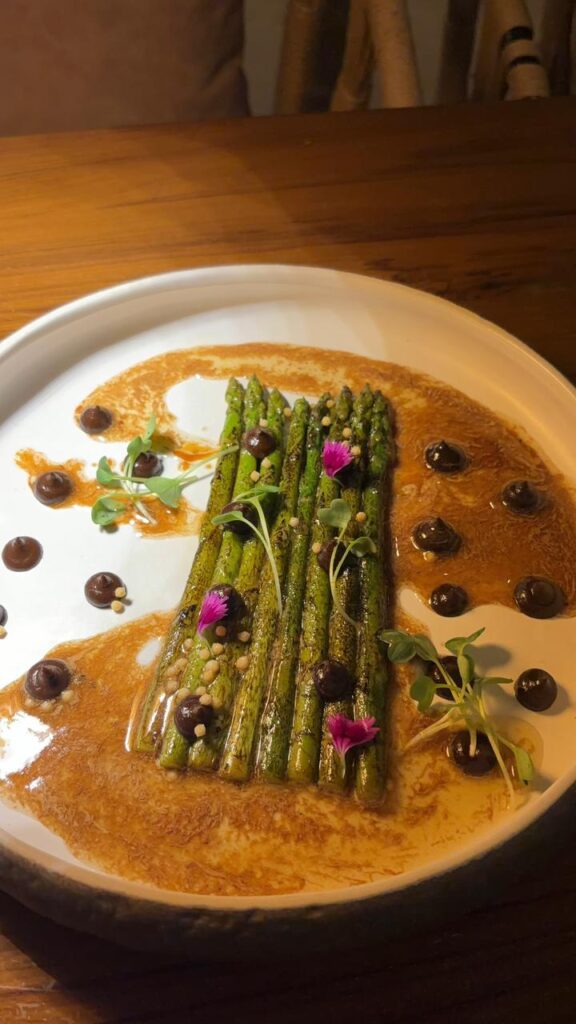
Desserts close the experience on a high note. Balanced and indulgent without excess, they reflect the same clarity of thought seen throughout the menu.
What stands out most is Chef Ashwin Singh himself—warm, engaged, and genuinely hospitable. His presence adds an ease to the experience, making Akina feel less like a destination restaurant and more like a place you’d want to return to, again and again.
The Akina Edit is not about excess or spectacle. It’s about thoughtful innovation, comforting familiarity, and flavours that linger long after the table is cleared. And in that quiet confidence, Akina truly shines.
Also Read:
Review: Roxanne’s Bar & All Day Diner: Retro Comfort and Food You Linger Over
Review: Ammakai and the Joy of Eating With Your Hands
Review: OPA Kipos Returns to Mumbai with a Smashing Comeback at Worli





[…] Read:Review: Akina has always carried a storyReview: Roxanne’s Bar & All Day Diner: Retro Comfort and Food You Linger OverReview: Ammakai […]
I’ll immediately grab your rss feed as I can’t to find your e-mail subscription link or e-newsletter service. Do you’ve any? Kindly allow me know in order that I may just subscribe. Thanks.