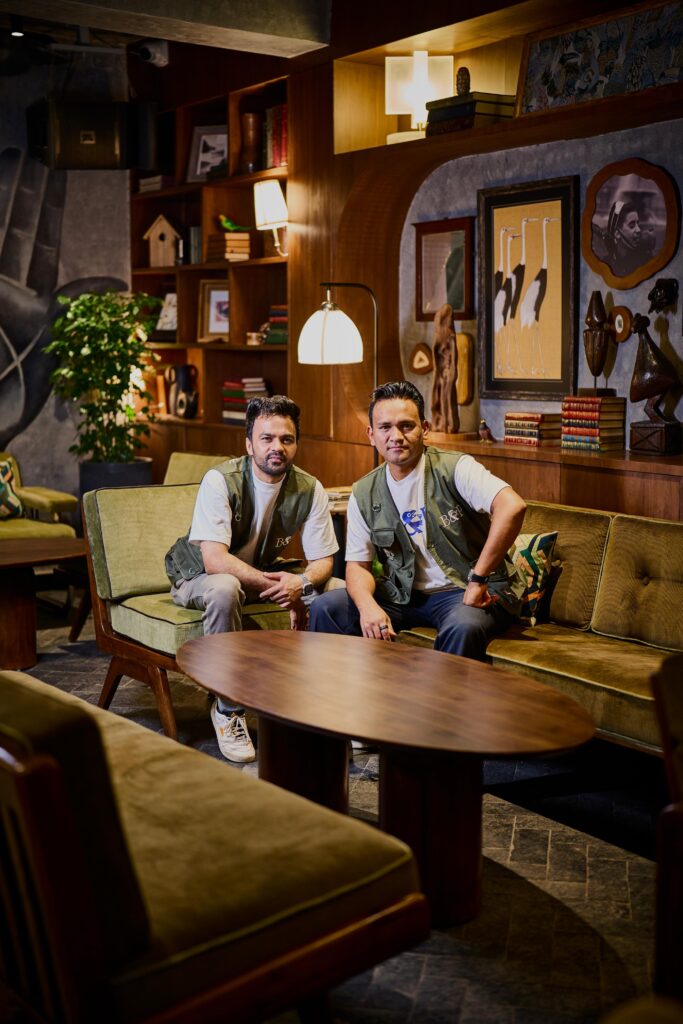
Bar takeovers have quickly become one of the most defining forces in India’s evolving cocktail landscape, turning one-night collaborations into meaningful cultural exchanges. At Barbet & Pals in Delhi, founders Jeet Rana and Chirag Pal describe this shift as the end of isolation behind the bar. “Bar takeovers have turned what was once an isolated craft into a shared creative ecosystem,” they say, explaining how travelling with their Kumaon-inspired menu revealed the universal appeal of Indian regionality when told through a contemporary lens. Guests across six cities connected instantly with myol, mundryani, and local Kumaoni flavours—proof, they say, that storytelling carries Indian ingredients further than expectations ever could.
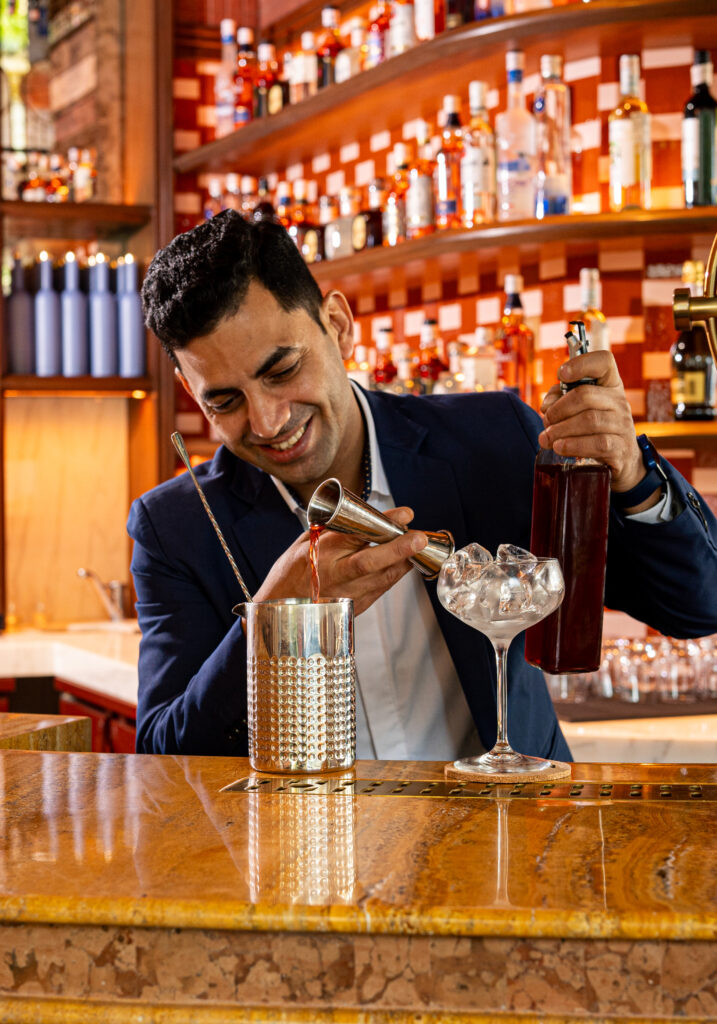
Mumbai brings its own playful spirit to the movement, with Varun Sharma, Head of Bars – EHV International recals a takeover where a visiting Hong Kong team created a Cognac-based Strawberry Cheesecake cocktail that tasted exactly like the dessert. “It reminded us that beverages can be emotional,” he says. For him, bar takeovers aren’t just recipe swaps but creative provocations that nudge bartenders to build experiences rather than just drinks.
In Bangalore, the culture of collaboration runs deeper, blending craft with identity. At The Ritz-Carlton, Nitin Goyal views bar takeovers as “celebrations of identity and storytelling through liquid art,” describing how collaborations have helped reinterpret Indian botanicals through global techniques. Over at The Love Hotel, Shiva Kant Vyas frames these nights as “micro cultural exchanges,” where what transfers between bars isn’t just flavour but mood and presence—like their takeover inspired by the idea of an afterimage, playing with the space between memory and sensation. Adding to the city’s momentum, Bang has seen how international teams—from sustainable MICHELIN-recognised bars to narrative-driven concepts—bridge continents through flavour, technique, and shared philosophy. Together, these perspectives show why Bangalore has become one of the country’s most dynamic arenas for collaborative mixology.
Kolkata adds a philosophical lens to the movement, with Russel Issac describing bar takeovers as “the new diplomacy of the drinking world.” For him, the magic lies in cultural cross-pollination—kokum meeting vermouth, tender coconut distillate meeting umeshu—where collaborations become conversations between sensibilities rather than geographies. His most memorable exchange was a Vietnamese collaboration that paired strict minimalism with Kolkata’s sensory generosity, reminding guests that the future of cocktails is rooted in interpretation, not imitation.

In Amritsar, where cocktail culture is rapidly catching up to the metros, Anshul Tiwari has seen how takeovers can shift an entire city’s palate. “You’re exposed to philosophies you might never encounter otherwise,” he says. His favourite collaboration reimagined rose, jaggery and clove—the flavours of local memory—through clarifications and infusions. “Guests expected imported ingredients and instead found their own nostalgia reinterpreted. Innovation isn’t always foreign, sometimes it’s rediscovery.”
From there, the movement widens into an even broader cultural shift, captured by the perspective of a restaurateur who has seen the transformation first-hand. “Bar takeovers today have become platforms of exchange, where Indian ingredients meet global techniques, and international perspectives meet Indian creativity,” he says, reflecting on how Late Checkout has consistently experimented with bell pepper and chilli tinctures, nori shrubs, mushroom bitters, and 16-hour drip coffee with coconut oil–washed vodka. Collaborations abroad have been equally transformative. Hosting takeovers in New York at Dear Irving and The Ned Nomad proved that Indian bartending has earned its place in the world’s top cocktail cities. Berlin carried that energy forward, where guests engaged with Indian flavours with a curiosity and respect that affirmed India’s growing influence. “We no longer need to imitate global trends,” he says. “We’re helping shape them.” When Late Checkout hosts international bars like Paradiso, Origin, or Sago House, people plan their evenings around the experience. “The cocktail stops being just a drink; it becomes a story,” he adds. “A shared moment that travels across cultures.”
At a high-energy bar Moxy in Bengaluru’s airport district, Ranjeet Singh sees takeovers as mini-festivals—immersive, communal evenings that blend culture and creativity. Their collaboration themed around Johnnie Walker Blonde transformed the bar into a tropical, golden moodscape. “People no longer come just to drink,” Ranjeet says. “They come for experiences, for stories, for connection.”
Across cities, the movement has grown into something far larger than its format. What began as guest shifts has become a national creative engine—one that pushes bartenders to think in flavour, feeling, memory, and philosophy. Bar takeovers have shifted India from following trends to shaping them, turning each cocktail into a narrative that travels effortlessly from one city to another, and increasingly, from India to the world.