Through Seated, founders Jovita and Raina are creating travelling dining experiences shaped by food, atmosphere and the particular chemistry that develops when people are given time to stay.
Most people can recall a dinner they did not want to end. The food may have been excellent, although that is rarely the entire memory. What returns later is something often harder to explain. This could be the song playing when the table ordered another round, the stranger who became unexpectedly easy to talk to, the warmth of the room, or the point of the evening where everyone realised that several hours had passed without anyone checking the time. It was this understanding that brought Jovita Kothari and Raina Modi to Seated, their travelling private-dining concept built around the emotional life of a meal.
The founders had spent years paying attention to places that produced this feeling. They found it in listening bars in Italy, in small wine bars where conversations travelled easily between tables, and in restaurants where the light softened so gradually that the room seemed to change without anyone noticing. They recognised it in hotels that made guests slow their pace as soon as they entered and in dinner parties where people lingered long after the plates had been cleared. These places were varied in style and geography, yet each understood how to hold people for an evening. Seated grew from Jovita and Raina’s desire to explore that quality through experiences of their own.
Two Journeys Into Hospitality
Jovita came to the idea through professional kitchens, working in Michelin-starred restaurants in New York as well as accomplished kitchens back home. The experience gave her an exacting respect for discipline and technique, along with a clearer sense of what technical skill alone could achieve. Over time, she realised that the meals she remembered most vividly were not always the most elaborate or perfectly executed. They were the ones that had affected her emotionally.
“I’ve always been drawn to experiences more than things,” she says. “Food just happened to become the way I understood them.”
Her attention gradually expanded beyond what was happening in the kitchen. She began thinking about how the music altered the mood, how the room changed as the night progressed and why certain restaurants made departure feel premature. “I’d leave restaurants thinking less about one dish and more about why I didn’t want the night to end,” she recalls. “I think that’s when I realised I wasn’t only interested in food anymore. I was interested in how an entire experience comes together.”
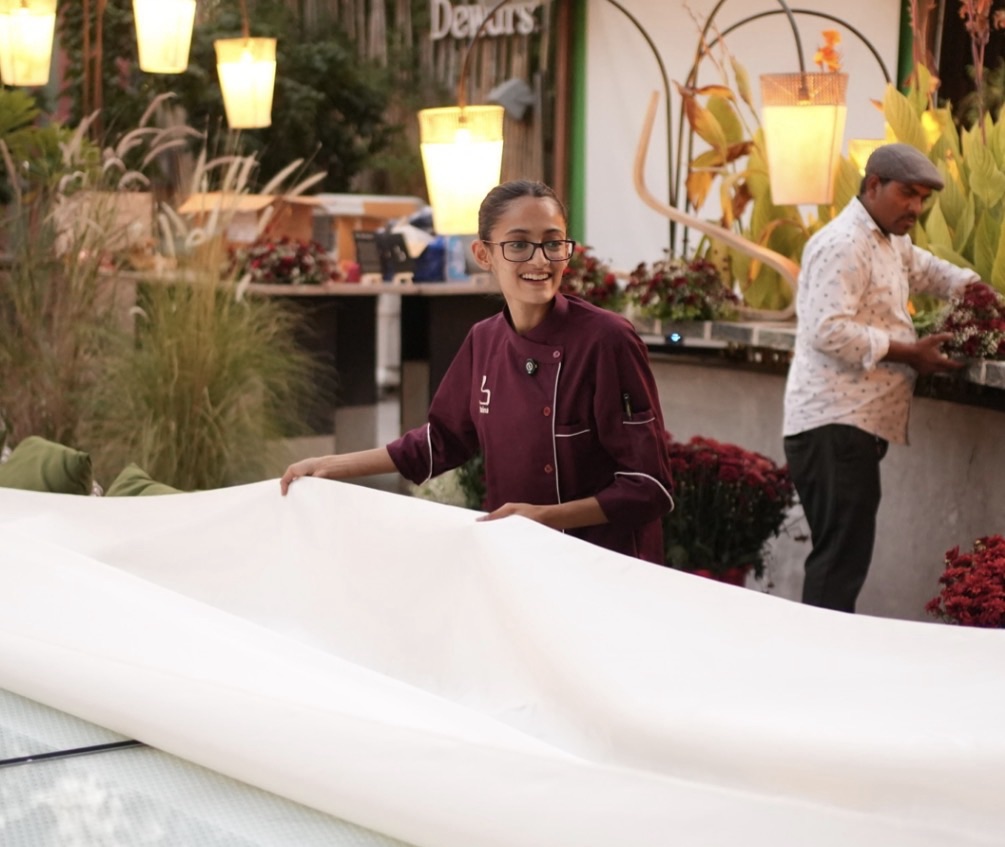
Raina’s route began with a cloud kitchen during the pandemic, followed by formal study at École Ducasse and work in Paris under a Meilleur Ouvrier de France pastry chef. Those years deepened her appreciation for craft, restraint and the repetition required to make something appear effortless. Her eye, however, frequently travelled beyond the kitchen. She noticed how flowers could soften the formality of a room, how service determined the rhythm of conversation and how lighting could influence people before they were consciously aware of it.
“I’ve always noticed the details people don’t consciously register,” Raina says. Long before Seated had a name, she was collecting references from cafés, boutique hotels, listening bars and private gatherings, guided less by a specific business plan than by an instinctive interest in places that stirred an emotion. “Looking back, I don’t think I realised I was researching,” she says. “I was just paying attention to places that made me feel something.”
Travel gave both founders a wider vocabulary for these instincts. Some of the meals they still discuss were not necessarily the finest food they had eaten. They remember those evenings because of the people they met, the city around them, the music playing in the room or the mood they were in at the time. Food became one layer within a much larger memory. Atmosphere, conversation, anticipation and emotion were often what remained years later.
Different Instincts, A Shared Sensibility
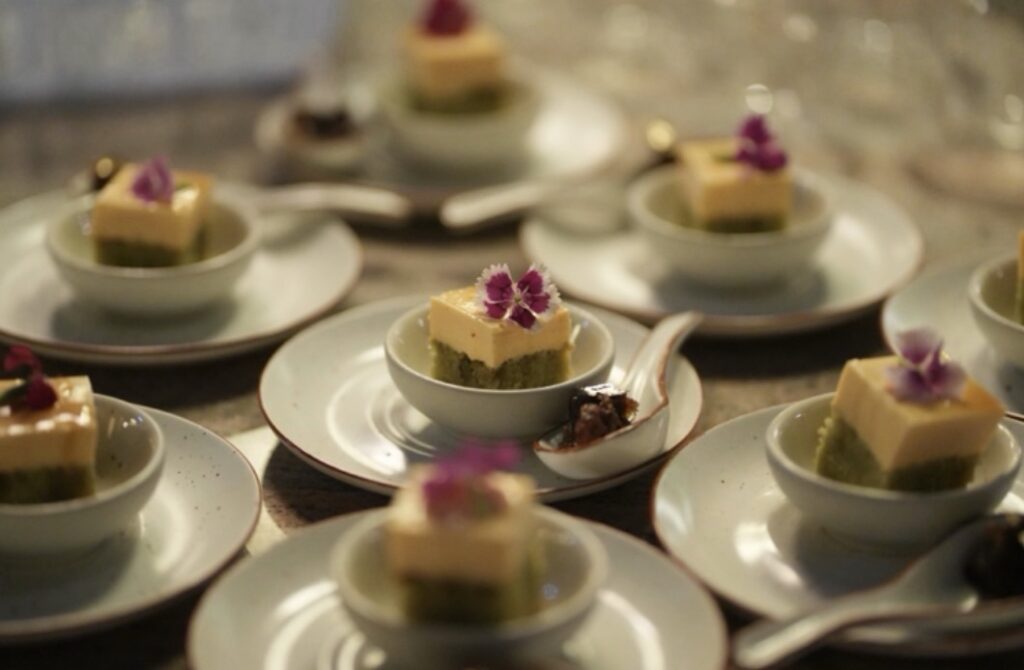
Although Jovita and Raina share a sensibility, they enter the creative process from different directions. Jovita naturally begins with the menu, considering its narrative as carefully as its flavours. “Whenever we’re building a dinner, I’m always asking: What’s the story? How should it unfold? When should guests be surprised? When should something feel familiar?” she explains. “I like thinking about the emotional rhythm of a menu almost as much as the food itself.”
Raina starts with the desired emotional response. Before discussing flowers, music or table design, she asks how people should feel when they enter the room. Every later decision becomes an answer to that initial question. Their methods eventually meet in the belief that each element should contribute to the same story, with no detail competing to become the evening’s main attraction. “We rarely approach things from the same direction,” Raina says, “but somehow we almost always end up in the same place.”
This is particularly evident in her approach to beauty. Raina has little interest in tables designed primarily to be photographed or admired from a distance. If guests spend the night discussing how attractive everything looks, she feels the visual layer may have demanded too much attention. “Beauty should never feel performative,” she says. “When beauty feels effortless, people stop looking at it and start living inside it. That’s when it has done its job.”
A well-composed room should give people a sense of comfort and occasion while leaving their attention free for one another. Flowers, candles, linens and light become part of the atmosphere rather than decoration placed on top of it. This restraint is important to the Seated experience. Its beauty is intended to be felt gradually, through the ease it creates in the room and the way it supports everything happening around the table.
Building an Evening From a Feeling
A Seated experience can begin with a destination, a season, a piece of architecture, a film, a book or a song. At other times, its starting point is simply a feeling the founders want guests to carry home. Once that emotional premise has been established, the menu, drinks, flowers, lighting, music and pace are developed as parts of a single composition.
“It almost never starts with the menu,” the founders explain. “Every experience begins with a central idea or emotion. Once that foundation is clear, every other element starts falling into place.”
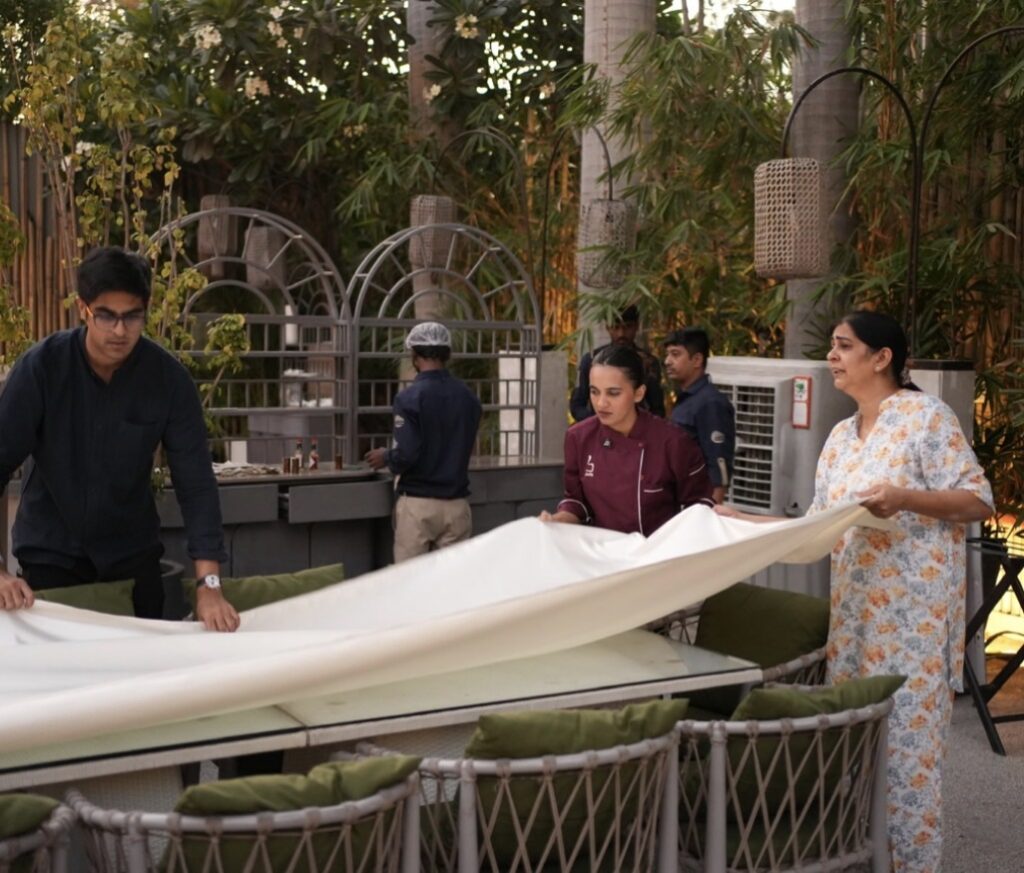
The process requires detail without rigidity. Jovita and Raina may spend half an hour adjusting the position of a candle or change the playlist shortly before guests arrive because the room feels different that day. Guests may never identify these choices individually, and they are not expected to. The founders believe care has a cumulative presence; people can sense when an experience has been considered closely, even when they cannot isolate the decisions responsible for that feeling.
This attention is also what separates composition from control. The room, menu and pace are developed deliberately, while the human outcome remains open. “We design the framework very carefully, but never script the evening,” they say. “The menu has structure. The pacing has structure. The room has structure. Everything else belongs to the guests.”
Some dinners become loud and exuberant. Others remain gentle and reflective. Certain gatherings take an unexpectedly emotional turn, while some end with guests lingering well beyond the final course. Jovita and Raina cannot manufacture these outcomes, and they have no desire to do so. Their work lies in creating the conditions for people to relax into the evening and allowing the personalities around the table to determine what happens next.
Creating the Evening They Kept Looking For
Seated emerged gradually through conversations the two women kept having after meals. Whenever they travelled or visited a new restaurant, they would discuss the evening for hours, only to realise that they had said remarkably little about the menu. They remembered the room, the music, the people they encountered and the precise moment the atmosphere began to change. A fleeting exchange could occupy more of their conversation than the food itself.
“There wasn’t one big lightbulb moment,” they say. “It happened slowly. At some point, we looked at each other and realised we weren’t actually talking about restaurants anymore. We were talking about experiences.”
The idea continued returning to them, even when their confidence was less certain. After dinners, they repeatedly asked each other what had made the night memorable, and the answer often had very little to do with a single dish. Eventually, the persistence of that conversation became its own form of conviction. They wanted to create the kind of evening they were repeatedly searching for: generous, considered and unhurried, with enough structure to make guests feel cared for and enough openness for something unexpected to happen.
Their decision to make Seated a travelling concept was equally intentional. A fixed address would inevitably establish its own visual language and become closely tied to the identity of the project. Seated allows each new space to influence the experience, giving the founders different kitchens, collaborators, guests and cultural contexts to respond to. “If we’d opened one restaurant, the space would have become part of our identity,” they explain. “With Seated, every room becomes part of the identity instead.”
Movement keeps the work curious. Every collaboration introduces a fresh set of creative questions, and every destination changes the way a dinner can be imagined. The concept is able to evolve from one experience to the next while retaining the care, intimacy and emotional intention at its centre.
Giving People Time to Stay
The travelling format also allows Seated to respond to a wider fatigue with rushed dining. Many restaurant evenings now unfold under a subtle awareness of time: the next reservation, the next booking or the next place on the night’s itinerary. There is often a quiet pressure to order, eat, photograph and move on. Seated removes that pressure wherever possible.
“Everything today feels like it’s designed to move quickly,” the founders say. “We wanted to create an evening where nothing feels rushed. Where people linger. Where conversations are allowed to become uncomfortable, funny, unexpected.”
Guests are encouraged to settle into the table without feeling that another party is waiting for them to finish. Courses arrive at a considered pace, pauses are allowed to develop, and conversation has room to wander. Some of the most memorable parts of these dinners occur between courses, when the formal structure recedes and the personalities around the table begin to shape the night.
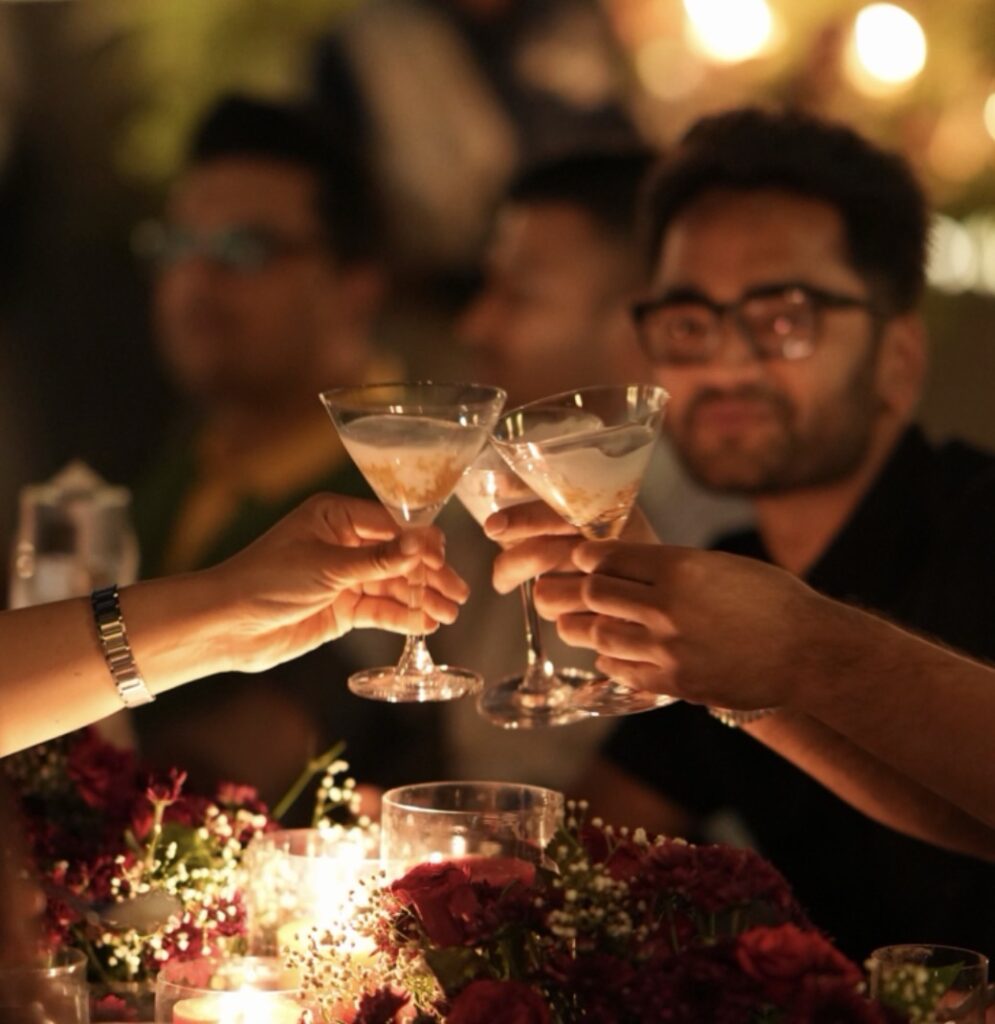
Jovita has noticed that this shift often takes place around the third course. Guests who arrived polite and slightly guarded begin to relax. Phones disappear, people lean across the table and strangers start speaking with an ease that would have seemed unlikely at the beginning of the evening. “One thing that always surprises me is how quickly people relax when they feel comfortable,” she says. “Somewhere around the third course, something shifts. Strangers are suddenly talking like they’ve known each other for years.”
This appetite for smaller, more personal gatherings is becoming increasingly visible across Indian cities, where supper clubs, listening bars and limited-seat dining experiences are finding an eager audience. Jovita and Raina believe their appeal extends beyond novelty or exclusivity. At a smaller table, people are more likely to feel recognised and less compelled to perform for the room around them. Hosts can participate in the evening, guests encounter one another with greater openness, and dining becomes a genuinely shared experience.
In cities such as Mumbai, Bengaluru, Delhi and Goa, where social life can be energetic and relentlessly scheduled, the chance to spend an unhurried evening in attentive company has begun to feel especially valuable. These formats offer a degree of intimacy that can be difficult to find in larger restaurants. They give people an opportunity to be present with those around them, including guests they may never have met under ordinary circumstances.
“I hope people understand that we’re people who care, probably more than we need to,” they say. “We’re the kind of people who will spend half an hour moving a candle because the light doesn’t feel quite right, or change the playlist ten minutes before guests arrive because the room feels different that day.”
No guest needs to know how many times a candle was moved or how late the music was changed. The value of those choices lies in their collective effect: a room that feels generous, an evening that moves naturally and a table at which people become more open to one another. Food gives Jovita and Raina a language through which to express that care, while Seated gives other people a place to experience it together. What they hope to offer is simple, even if achieving it requires considerable thought: the feeling of having belonged, for a few hours, to an evening worth remembering.