When I landed in Leh, right before the brink of winter, the mountains loomed craggy against the pristine blue sky as we descended. “Photography strictly not allowed,” the pilot announced as we made our way to a barren strip flanked by towering hills — the green of summer now fading into brown. Little did I know I would soon be facing a deluge of discoveries in food. My knowledge of Ladakhi cuisine until then was limited to the foraged whimsy of city chefs who’d return from here armed with jars of sea buckthorn, bunches of nettles, or apricots by the dozen, often translating the region’s essence into pretty plates and fiery chutneys.
But the week that followed, an all indulgent itinerary by the Omo Cafe Gurgaon team, with their special undertaking — Omo Adventures, was a relentless culinary journey through the region. A slow journey from Leh to Nubra and back, revealed how food here is shaped by centuries of movements. Traders, monks, and nomads once crossed these cold deserts, carrying with them influences from Tibet, Central Asia, and Kashmir. Over time, these fused into a cuisine which is a geography of taste, as well as survival.
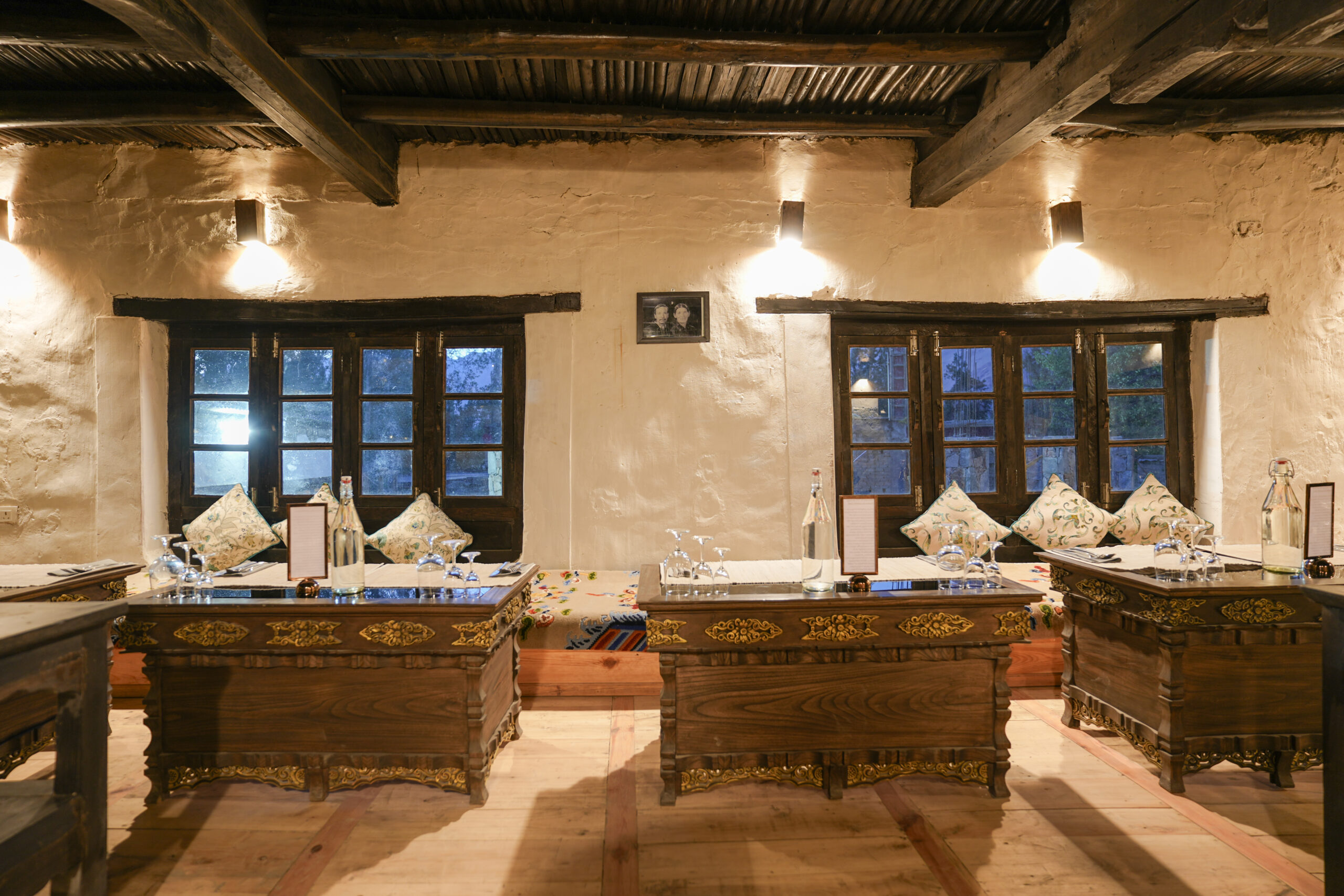
One such discovery mesmerised me, sitting hidden in Hunder village — The Heritage Kitchen, a 200-year-old mud-brick home, its kitchen restored into a dining space that felt like a portal to a bygone era. It resides on the grounds of Stonehedge Groups Organic Retreat run by Deachen Lahmo of Nubra Valley, a custodian of her family’s heirloom recipes, and Tsetan Namgail of Domkhar Village, known for her deft hand with traditional broths and hand-pulled noodles, the kitchen preserves the essence is as much about preservation as presentation.
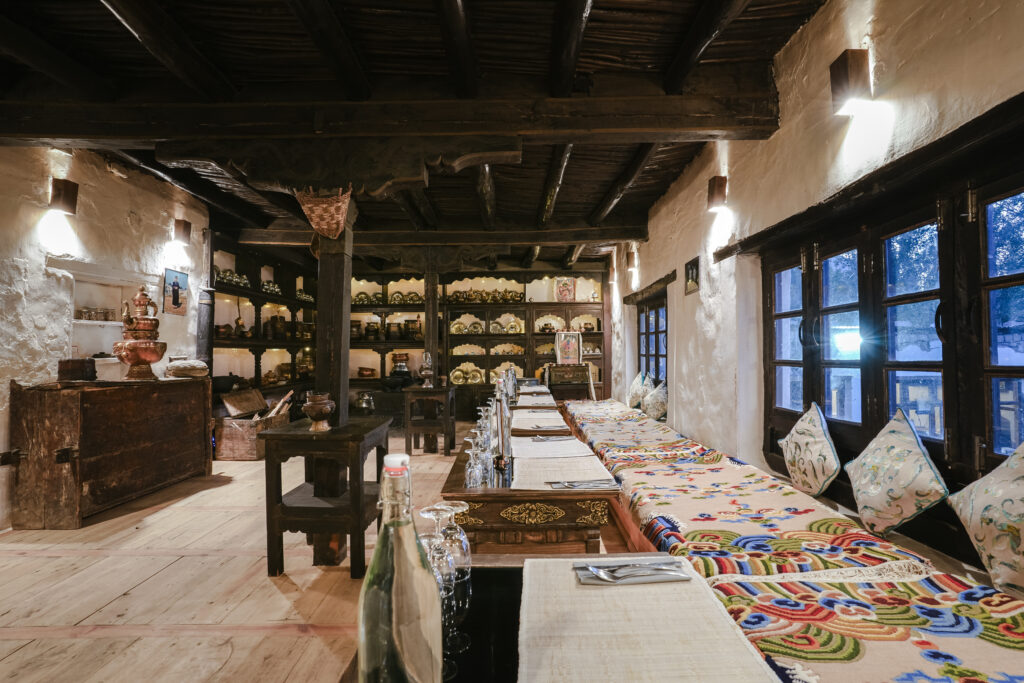
The design is deliberately elemental: a low doorway that forces you to bow as you enter; thick, sun-baked walls that trap the warmth of the clay stove; shelves lined with copper pots and willow baskets. Butter lamps flicker beside apricot-wood ladles, and one even can imagine smoke from an ancient chula curl upwards, perfuming the air with barley and butter when this kitchen was active. It is stark and utterly soulful.
The space’s instantaneous energy begets the feeling of food transcending nostalgia to become a living archive.
The Diversification of Flavours
What flowed next was a sequence that blurred with time and followed by incredible taste. Traditional mealtimes in Ladakh still involve sitting low, on cushions or mats, often within the kitchen itself. It is a place of disconnect where warmth and conversation are part of the meal. We were seated cross-legged on the floor on a low seat, colourful, and with a low wooden table in front of us. Decorated with meticulous plating and a single flower in a delicate vase. The air carried a quiet hum of hospitality, and then, one after another, the courses began to arrive, 9 of them, plated with the most painstaking beauty on earthenware, metal, and ceramics of the region.
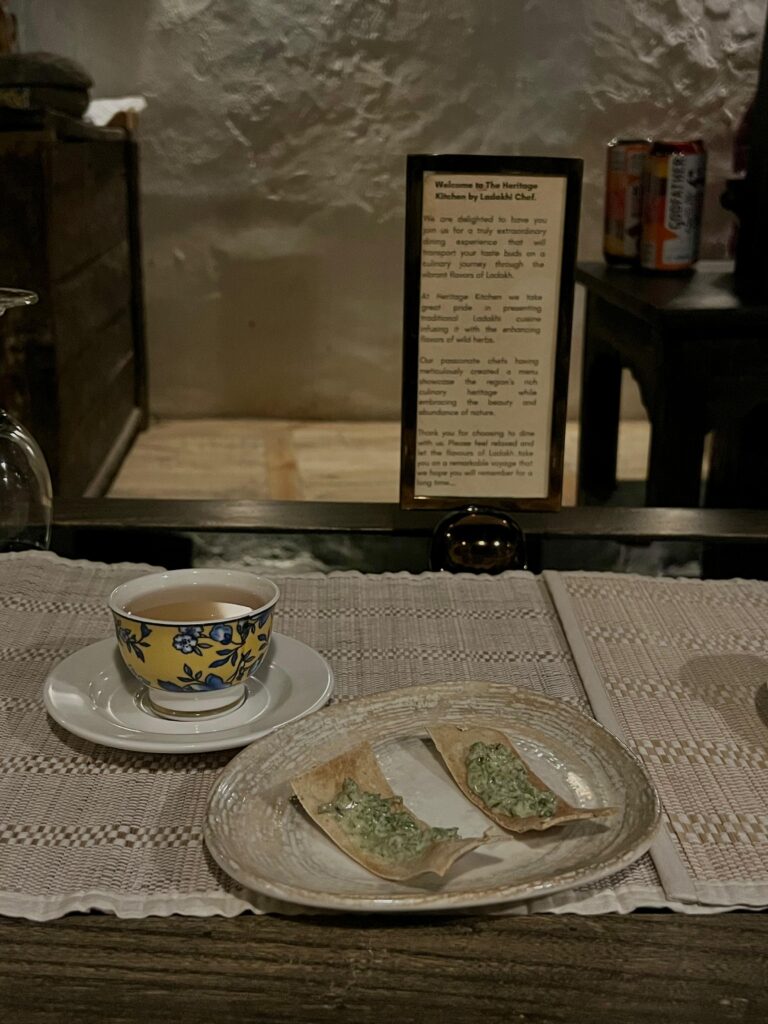
We began with Khunak, Ladakh’s age-old comfort drink. A light, savoury brew of tea leaves and salt. It reminded one of sharing a beverage after a day’s work, around a hearth, building an appetitie.
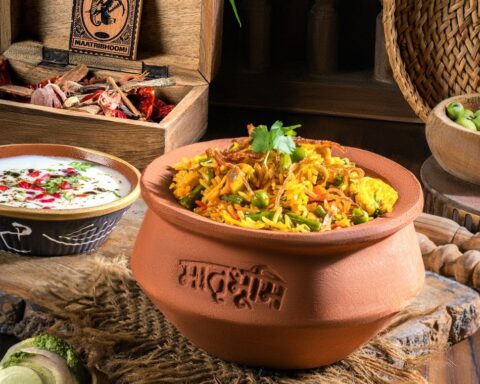
Then came a Buckwheat Cracker with Tangthur, crisp and grainy, paired with a savoury yogurt and herb spread that evoked a sharp brightness of mountain chives. It went perfectly with the Ngamthuk, a hearty barley soup. This thick liquid is meant to be restorative, laced with small cubes of yak cheese that melted into the broth. Pola arrived next, Ladakh’s take on pulao, whether with vegetables, chicken, or mutton, light on spice yet perfumed with ghee, echoing the old Silk Route sensibilities.
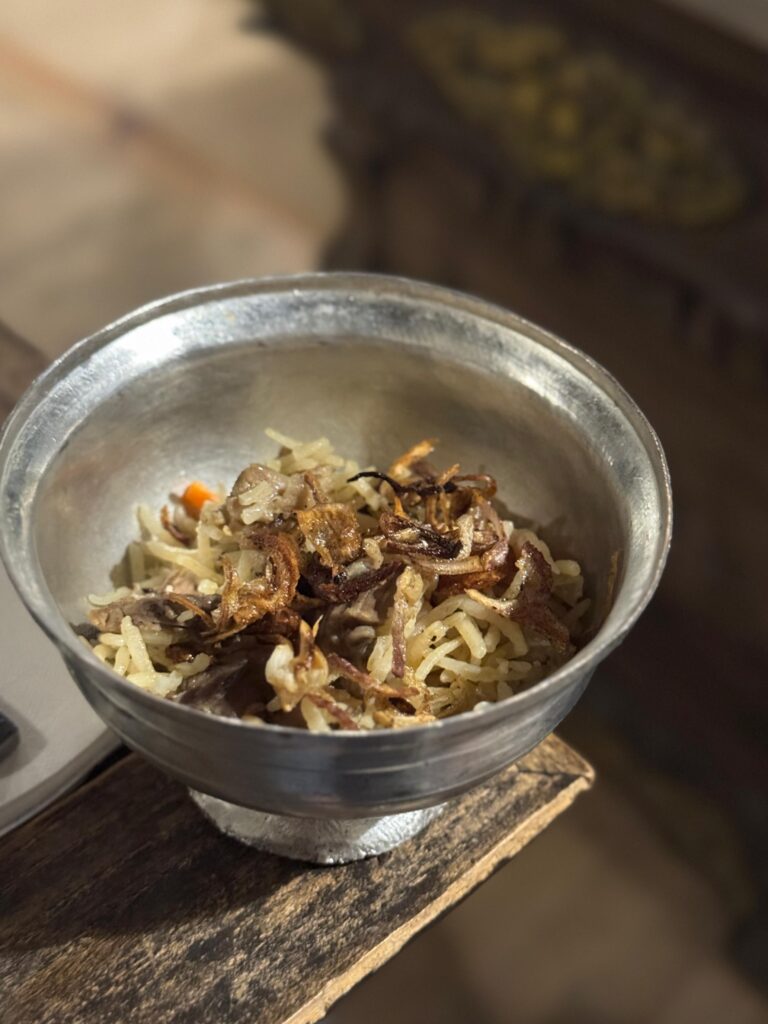
The meal trasscends into a crescendo : a bowl of Gya-thuk, hand-pulled noodles in a hot, nourishing broth, then Chutagi, the Ladakhi signature of bow-tie pasta simmered in a rich, spiced sauce. This was throughly comforting. Around this time I wondered how is it that this food has not permeated the country yet?
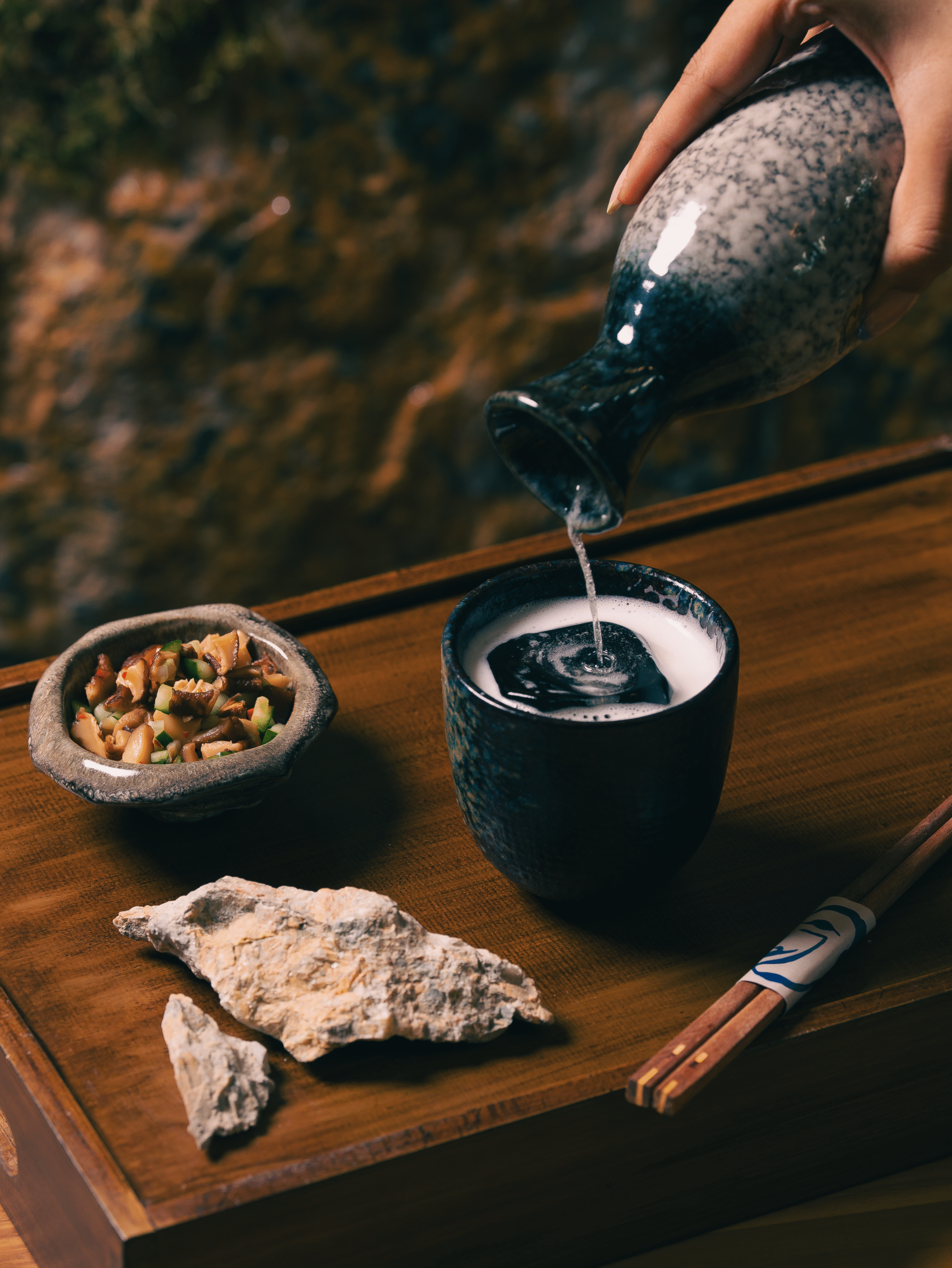
By the time dessert came, the silence comprehended our sating. Phating Chu, soaked apricots served warm, or in the summer, Phemar, topped with apricot jam, local through and through. To close, a choice of palate cleansers: house-brewed Seabuckthorn Kombucha or Chang, the local barley beer, both — local brews that competed the meal.